Tune Out the Noise: Staying Sharp When the Crowd Wants You to Crack

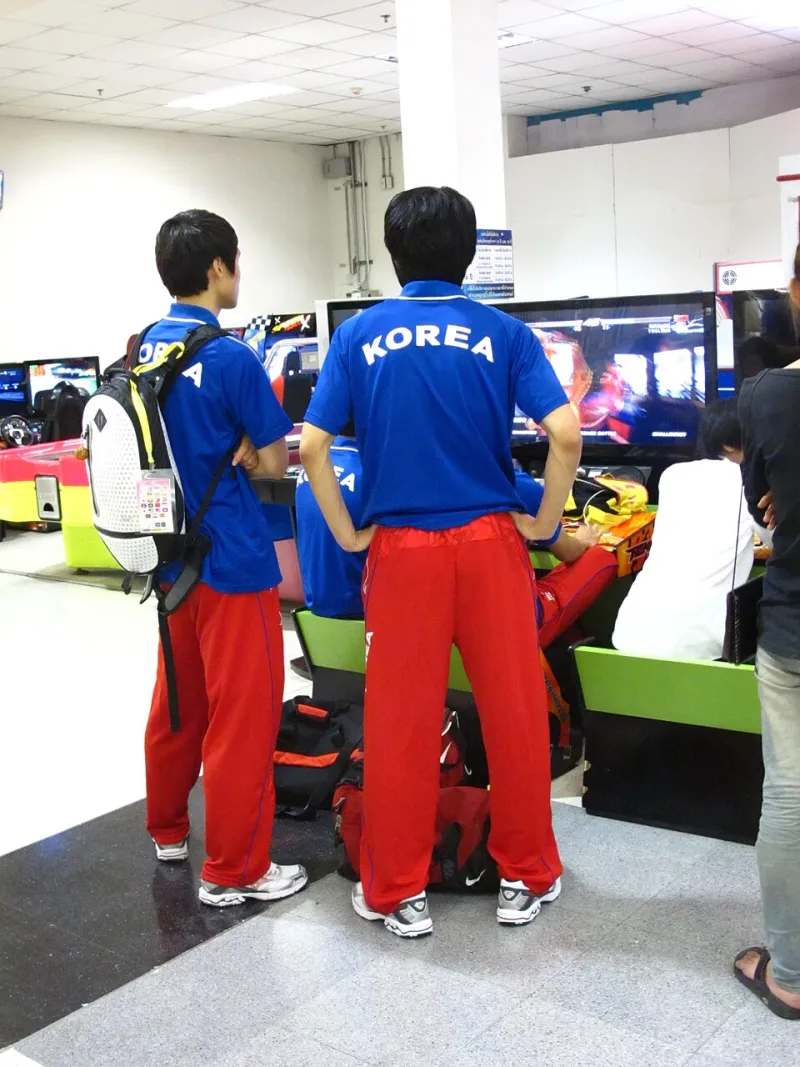
Photo: esports tournament crowd energy player focused gaming station, via thumbs.dreamstime.com
You've practiced the combos. You know the frame data. You've run the matchup in your head a hundred times. Then you sit down at a tournament station, the crowd is loud, your opponent's side of the room is louder, and suddenly your hands feel like they belong to someone else.
This isn't a skills problem. It's an environment problem — and it's one of the most underaddressed areas in the DOA3 competitive community.
The good news? Elite players have been solving this exact issue for years, and the techniques they use are learnable. Let's get into what actually works.
Why Hostile Environments Hit Different
First, it helps to understand what's actually happening to your body when the arena energy is against you. When you perceive a threat — and a hostile crowd registers as a social threat to your nervous system — your body shifts into a stress response. Heart rate goes up, breathing gets shallow, and your fine motor control takes a hit.
For a fighting game player, that last part is brutal. DOA3's execution requirements aren't forgiving. Timing windows for holds and counters are tight. When your hands are tense and your breathing is off, you're not playing your best game — you're playing a degraded version of it.
Understanding this isn't about making excuses. It's about knowing exactly what you're fighting against so you can address it with the right tools.
Build Your Pre-Match Ritual
Professional athletes — from NBA players to UFC fighters — swear by pre-performance rituals, and the sports psychology research backs them up. A consistent pre-match routine does two things: it signals to your brain that it's time to perform, and it gives you something familiar to anchor to when everything else feels chaotic.
For competitive DOA3 players, a solid pre-match ritual might look like this:
- Warm-up on your main character for at least five to ten minutes before your set. Not grinding matchups — just getting your muscle memory loose.
- Run through two or three of your core punish sequences in training mode. You're not learning anything new; you're reminding your hands what they already know.
- Step away from the setup for a few minutes before the match starts. Give yourself a reset window.
The specific actions matter less than the consistency. Your brain learns to associate the ritual with performance mode, and that association pays dividends in high-stress moments.
Breathing Is Not a Soft Skill
Seriously. Box breathing — inhale for four counts, hold for four, exhale for four, hold for four — is used by Navy SEALs and professional athletes specifically because it manually overrides the stress response. It slows your heart rate and brings your fine motor control back online.
Before a tournament set, especially one where you can feel the room is against you, run two or three cycles of box breathing. You'll feel the difference within 30 seconds. This isn't woo-woo stuff — it's physiology.
During a set, you have natural breaks between rounds. Use them. Don't stare at your opponent, don't engage with the crowd, don't check your phone. Breathe deliberately. It takes about ten seconds and it works.
Mental Anchoring: The Technique Top Players Use
Mental anchoring is a concept borrowed from sports psychology that involves connecting a physical action to a specific mental state. The idea is that you train yourself — outside of competition — to associate a gesture or action with feeling calm and focused. Then, when you need that state in competition, you trigger the anchor.
Practically, this might mean pressing your thumb and forefinger together before each round starts. Or taking one slow breath exactly when you sit down at the station. The action itself doesn't matter — the conditioning does.
This takes time to build. You need to practice the anchor during training sessions where you're actually feeling focused and in flow, so the association is genuine. But once it's built, it becomes a reliable tool for cutting through crowd noise and hostile energy.
Stop Trying to Block Out the Crowd
Here's a counterintuitive one: don't try to pretend the crowd doesn't exist. Active suppression — trying to force yourself not to notice something — actually increases your awareness of it. It's the same reason telling yourself "don't think about a red apple" immediately makes you think about a red apple.
Instead, acknowledge the energy and redirect your attention toward something specific in the game. Lock onto your opponent's character model. Focus on their movement patterns from the opening of the round. Give your brain a concrete task to execute rather than a vague instruction to ignore everything around you.
Top players in the DOA3 community talk about entering a kind of tunnel vision during high-pressure sets — not because they're blocking out the environment, but because their attention is so locked onto the match that the environment becomes irrelevant. That's the target state. You get there through focus, not suppression.
Practice Adversity, Not Just Execution
One of the biggest gaps in how most players train is that they practice in comfortable, controlled environments and then expect to perform in chaotic ones. That's a setup for failure.
Deliberately introduce adversity into your training. Play sessions with music cranked up loud. Have a friend talk trash while you're trying to execute. Play on an unfamiliar setup with different controller sensitivity. The goal isn't to make practice miserable — it's to expand your comfort zone so that tournament conditions don't feel foreign.
Players who've done this kind of stress inoculation training consistently report that hostile tournament environments feel more manageable. Not easy — manageable. And manageable is all you need.
The Arena Is Always Loud. Your Focus Is the Variable.
You can't control the crowd. You can't control whether the room is cheering for your opponent or whether the energy in the venue feels like it's working against you. What you can control is your preparation, your rituals, your breathing, and where you direct your attention.
The players who consistently perform in hostile environments aren't the ones who are somehow immune to pressure. They're the ones who've built systems for managing it. Build your systems. Then go take the arena.